

The place to find your perfect padel racket and more
The place to find your perfect padel racket and more
Answer a few quick questions and we'll match you to a padel racket that actually fits your game — no guesswork, no upsell.
Recommendations never shift because one shop pays a better commission than another. Every match is about your game, full stop.
Made by someone who spent real money learning the hard way, so your first (or fifth) racket isn't another expensive lesson.
Every racket in our database is pulled from real specs across a growing list of retailers — weight, balance, shape, and price, kept current. We do the digging so you don't have to: less time comparing spec sheets across a dozen tabs, more time actually on the court.
A quick spread across beginner, intermediate and advanced — browse all 50+ any time.
Take the quiz and get a racket recommendation matched to your level, budget, and playing style.
Shops we've partnered with — buying through these links helps support Pala Perfecta at no extra cost to you.








We proudly partner with affiliates all over the globe — please be aware some companies may charge a delivery fee or import duty/VAT depending on your delivery address.
Filter our full database however you like. Every racket links to live photos and prices.
Shops we've partnered with — buying through these links helps support Pala Perfecta at no extra cost to you.
We proudly partner with affiliates all over the globe — please be aware some companies may charge a delivery fee or import duty/VAT depending on your delivery address.
Small, cheap upgrades that work on any racket — no need to gamble on stock texture or buy a whole new racket.
Racket face texture gets a lot of marketing hype, but it's not your only way to add spin and grip. If you're bringing real spin technique over from tennis, pickleball, or another racket sport, these add-ons let you dial in extra bite on any racket — smooth-faced or not.

Head Padel Pro Spin Strips
Thin adhesive strips that go directly on the racket's face — the honest fix for players who want more bite on the ball without gambling on a new racket's exact surface. About 2g added weight, removable, and won't damage the racket underneath.
Wrap over your factory grip for more tack, comfort, or a slightly bigger handle. A worn or too-thin grip is one of the easiest, cheapest fixes on this whole site.
 $28.99
Siux Pro Perforated x12 Padel Overgrip
Perforated for breathability and extra tack in hot, sweaty matches. 12-pack.
 $9.00
$9.00
Wilson Padel AbsorbX Overgrips | 3PK
Sized specifically for padel rackets — ultra-absorbent, dry-feeling tack built for lasting play in sweaty conditions. 3-pack, Black or Red.
 $7.99
$7.99
Head Prestige Pro Overwrap Black
Single overwrap — the cheapest way to freshen a worn grip or add a touch of thickness.
 $97.00
Wilson Pro Padel Overgrip 50-Pack
Stock up for a full season (or a whole club) — works out to under $2 per grip.
🛒 Shop at Racket Central ↗ · 🛒 Shop at Padel USA ↗ · 🛒 Buy on Amazon ↗
 $26.90
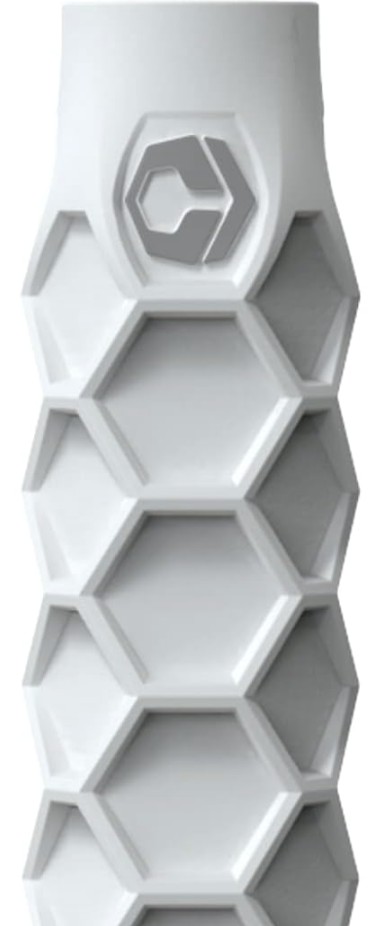
Hesacore Padel Paddle Grip
A thicker, molded ergonomic grip rather than thin tape — the hexagonal texture is built to ease tennis-elbow strain, add real grip strength, and cut vibration. Available in Small and Medium.

4on TotalGrip Spray
A spray for your hands, not the racket — cuts slipping in your palm during long, sweaty matches without rewrapping anything.
🛒 Shop at Racket Central ↗ · 🛒 Shop at Padel USA ↗ · 🛒 Buy on Amazon ↗
A snapped or frayed wrist strap is an easy, cheap swap — no need to replace the whole grip.
 $12.99
Gamma Sports Replacement Wrist Strap
A quick swap for a frayed or snapped factory strap — keeps your racket safely tethered to your wrist during fast swings.
 $17.99
Gamma Sports Leather Replacement Grip
The same replacement strap in leather — a firmer, more premium feel in the hand than the standard version.

Smash Life Ball Pressurizer Bounce Tube (Padel)
A patented built-in pump repressurizes your balls after every match — a hermetically sealed tube that keeps them bouncing like new and cuts down on buying fresh cans.
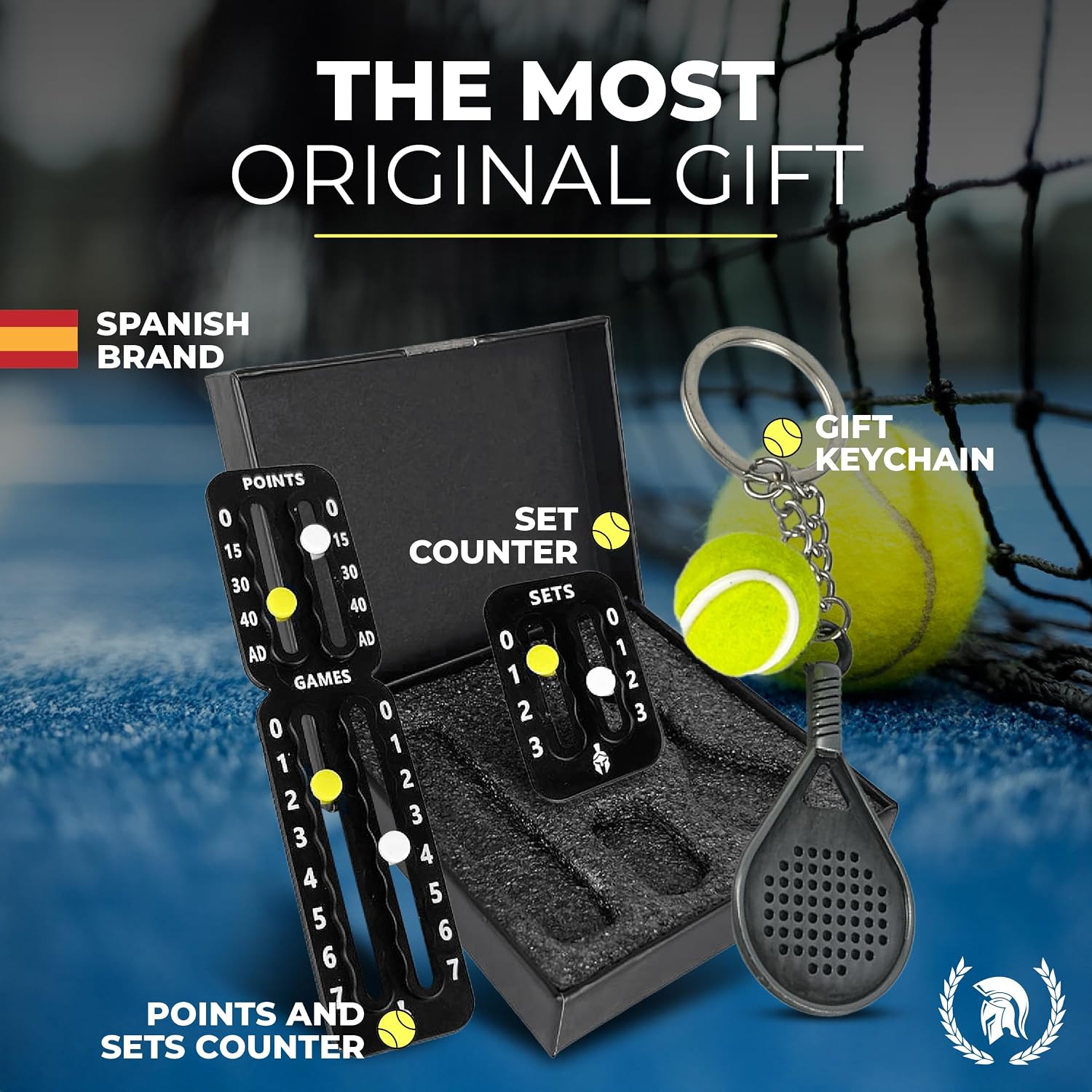
Tennis & Padel Score Keeper Keychain
A tiny clip-on scorekeeper that sticks to your racket with 3M adhesive — track points, games, and sets without an app or an argument. Weighs about 1.3g, works for tennis and padel, and comes off clean when you want to remove it.
Dealing with arm or elbow strain from repeated strikes? Check out Recovery & Prevention for braces, sleeves, and other gear built to help you recover between sessions.
Padel is hard on your arm, elbow, and shoulder. Here's gear built to help you recover between sessions and stay ahead of overuse injuries — more added as we find things worth featuring.
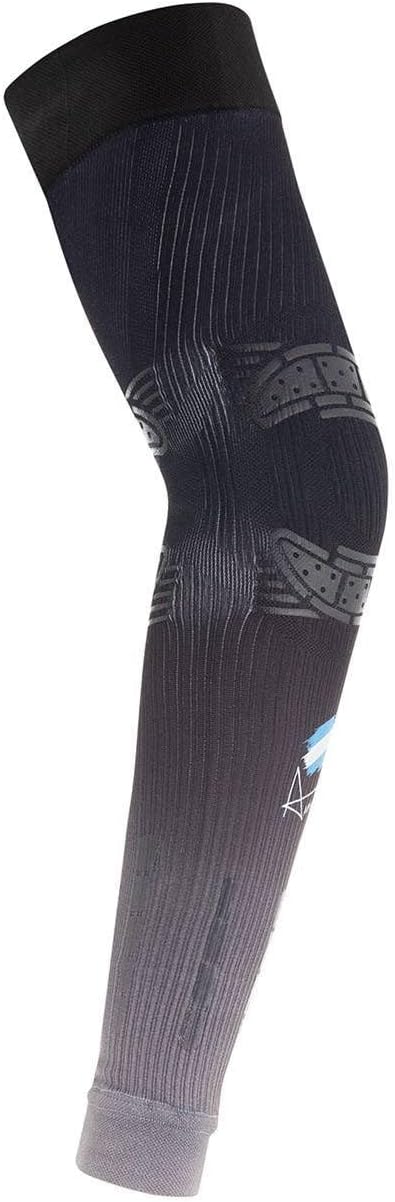
FLOKY No Strain x Tapia Biomechanical Sleeve
A compression sleeve designed with pro player Tapia to stabilize the forearm and elbow through repeated strikes — built to ease inflammation and support recovery, not just cover it up. Size M/L.
Five things decide how a racket plays. Here's what each one feels like on court.
Light (340–365g): easy to swing, quick reactions at the net, less tiring, gentler on your arm. Heavy (365–390g): more power and stability behind every shot, but you need the strength and technique to swing it.
Simple test: if your arm is tired after 30 minutes, the racket is too heavy for you.
Two rackets can weigh exactly the same but feel completely different. Low balance (weight near the handle) feels light and nimble in your hand — easy to flick around for fast volleys, easiest on your elbow, but you generate the power yourself. High balance (weight in the head) feels top-heavy when you hold it out — it swings like a hammer for big smashes, but it's slower to move and punishes late timing. Medium sits in between.
The weight printed on a racket is its static weight — what it weighs sitting on a scale. What your body actually feels is swing weight: how heavy the racket is in motion, which depends on where the weight sits. Weight near your hand barely resists the swing; weight out in the head resists it a lot.
This is why a 375g handle-weighted racket can feel lighter on your arm than a 360g head-heavy one. When comparing rackets, don't just read the grams — hold each one out and swing it. The one that feels quicker and easier to whip through the air has the lower swing weight, whatever the label says.
Why it matters: low swing weight = faster reactions at the net, less fatigue, less shoulder strain. High swing weight = more momentum crashing into the ball on smashes. Attackers accept the extra effort for the power; everyone else usually shouldn't.
The zone on the face where hits feel clean and go where you aimed. A big, centered sweet spot forgives mishits (great when you're learning). A small, high sweet spot rewards perfect technique with maximum power — and punishes everything else.
Soft core: the ball sinks in and springs back out — easy depth with little effort, comfortable, absorbs vibration. Medium core: where most rackets actually sit — a balance of the two, and the safe choice if you're unsure. Hard core: more precise and more powerful, if you hit hard and clean. It also sends more vibration into your arm.
Two variations worth knowing: some brands go even softer with foam/ultra-soft cores (maximum comfort, common in beginner rackets), and some use dual-density cores — a soft layer over a firmer center — to give soft touch on gentle shots and firmer response when you swing hard.
Smooth: predictable, fine for most players. Rough/textured: extra grip on the ball for spin shots — mainly useful for advanced players. Physics testing shows texture matters less than the marketing claims; it won't create spin from poor technique.
Coming from tennis or another racket sport with real spin technique already? You don't have to chase down a specific "rough" racket — a set of spin strips adds that same bite to any racket you already own.
Shape is the single biggest choice. It decides where the sweet spot sits and how the racket balances.
Sweet spot: dead-center, large.
Feel: forgiving and easy — mishits still go roughly where you aimed. Usually handle-weighted, so it's quick in the hand.
Best for: beginners, defensive players, anyone who values control.
Sweet spot: slightly higher, medium size.
Feel: the all-rounder — noticeably more punch than a round racket without losing much forgiveness.
Best for: intermediate and all-round players.
Sweet spot: high on the face, small.
Feel: head-heavy, swings like a hammer. Maximum smash power, minimum margin for error.
Best for: advanced attackers with clean, consistent technique.
Sweet spot: mid-high but still large.
Feel: between teardrop and diamond — attacking power with a forgiving face.
Best for: improving players moving toward an attacking game; all-rounders who want extra punch on smashes without giving up forgiveness; and attackers who find full diamonds too punishing — including hard hitters managing arm strain, since the bigger sweet spot means fewer jarring mishits.
| Shape | Sweet spot | Balance | Power | Forgiveness | Best for |
|---|---|---|---|---|---|
| Round | Center, large | Low | Low | Highest | Beginners, defenders |
| Teardrop | Mid, medium | Medium | Medium | Medium | Intermediate, all-round |
| Hybrid | Mid-high, large | Med-high | Med-high | Good | Improving attackers |
| Diamond | High, small | High | Highest | Lowest | Advanced attackers |
A racket is a face (the hitting surface) wrapped around a core (the foam inside). How stiff the face is and how firm the core is determine almost everything about the feel.
Flexible and soft — the ball springs off with little effort from you. Cheaper, slightly heavier. The comfortable choice, and what most beginner rackets use.
Stiffer, more durable, more powerful — but a harder feel that needs good technique to exploit. Found in mid and high-end rackets.
The number is thousands of carbon filaments per woven strand. In practice: 3K = more flexible and forgiving, comfier on the arm. 12K = the balanced middle ground and safest pick. 18K = very stiff and responsive — maximum energy transfer for advanced players who hit clean.
Don't obsess over the K number — the core and construction matter just as much. Treat it as a rough guide.
The standard. Comes in ultra-soft → soft → medium → hard. Softer = comfort and vibration absorption. Harder = more control and power for hard hitters.
Softer than EVA — maximum comfort and effortless ball exit, but less precise. Common in beginner rackets.
On contact: the ball sinks into the face like a trampoline and springs back out. Cushioned, muted feel — very little vibration reaches your arm.
What it gives you: easy depth without a big swing. The racket does part of the work, which is exactly what you want if your swing is still developing or on the slower side. The trade-off: less precision — the ball response is bouncier and a touch less predictable on delicate shots.
On contact: the face barely flexes, so the hit feels firm, crisp, and direct — you feel exactly where and how you struck the ball. More vibration comes through to your arm.
What it gives you: when you swing fast, almost no energy is lost in the face — maximum power transfer on smashes and pinpoint feedback on touch shots. The trade-off: it gives nothing back on slow swings, punishes mishits, and is harder on the elbow.
Not sure? Ask yourself these two questions.
At the net, with smashes and volleys → you're an attacker. You take risks to end rallies fast.
From the back, with lobs and patient returns → you're a defender. You force opponents into mistakes.
Bit of both → you're an all-rounder.
"Points mostly end on someone's mistake" → you're still a beginner — and that's fine. It means consistency, not equipment, is what wins you games right now.
Smash it back → attacker. Block and lob it → defender. "Just get it over" → beginner.
| Style | Shape | Balance | Weight | Core |
|---|---|---|---|---|
| Beginner (any ambition) | Round | Low | Light (340–365g) | Soft |
| Defensive / control | Round | Low | Light–medium | Soft–medium |
| All-round | Teardrop | Medium | Medium | Medium |
| Attacking | Diamond or hybrid | High | Heavier (365–385g) | Medium–hard |
Spain is padel's home market, so Spanish shops have the widest selection — but buying across borders now has real extra costs. Here's the honest math (rates as of July 2026 — verify before ordering, tariff policy changes fast).
Thank you for shopping through our affiliate links! When you click through to any of these stores and buy anything — not just a racket — we typically earn a small percentage of that sale, at no extra cost to you. It genuinely helps keep Pala Perfecta free, up to date, and running.
We proudly partner with affiliates all over the globe — please be aware some companies may charge a delivery fee or import duty/VAT depending on your delivery address.
US-based shops (no import fees, fast delivery):
No surprises: VAT is included in listed prices and there are no duties within the EU. Top shops:
UK-based shops (no import fees):
These ship worldwide from Spain:
Budget for your country's import VAT/duties plus carrier fees — these are charged on delivery, not at checkout, so they surprise people.
Honest, research-backed guides to help you play better and buy smarter. New posts regularly.
July 2026 · 5 min read
Rackets are expensive, the spec sheets are confusing, and everyone at your club has an opinion. After going through the trial-and-error (and the credit card statements) myself, here are the five mistakes I see new players make over and over — and how to skip them.
That $350 diamond racket with 18K carbon is built for someone who hits the sweet spot nearly every time with a fast, clean swing. If you're still developing consistency, it will punish every off-center hit, send vibration into your elbow, and actually slow your progress. Pro rackets don't make you play like a pro — they demand that you already do. Play a soft, round, forgiving racket until your technique is consistent, then upgrade. Your future self (and your elbow) will thank you.
The grams printed on a racket are its static weight — what it weighs on a scale. What your body feels is swing weight: how heavy it is in motion, which depends on where the weight sits. A 375g racket with the weight near the handle can feel lighter on your arm than a 360g head-heavy one. Always hold a racket out and swing it if you can; if you're buying online, check the balance spec, not just the weight.
Elbow soreness after playing — even if it only shows up the next day — is your body flagging overload, and racket choice genuinely matters here. Vibration from stiff, hard rackets drives tennis elbow; swing weight from head-heavy rackets drives shoulder pain. If you feel either, prioritize a soft core, lighter weight, and low balance before anything else. (And see a physio if it persists — a racket helps, but it's not medicine.)
Rough surfaces are heavily marketed, but physics testing shows texture matters far less than advertised — and it can't create spin from developing technique. Learn to brush the ball first; buy the textured face when your slice actually bites.
Spanish shops have amazing selection, but since the US ended duty-free treatment for small packages, a €200 racket from Spain realistically lands at $265–285 after tariffs and carrier fees — charged at your door, not at checkout. Sometimes it's still worth it for a model you can't get locally. Just know the real number before you click buy, and check the shop's recent Trustpilot reviews first.
More guides coming soon: how pain shows up in padel (and what your racket has to do with it), why technique is both skill and injury prevention, and when you're actually ready to upgrade.
Padel's biggest events, and where to catch them — from the pro tour to your local circuit.

The top international tour: 26 tournaments across 18 countries in the 2026 season, opening February 9 in Riyadh and closing at the Finals in Barcelona in December. Four Majors this year — Qatar, Italy, France, and Mexico.
How to watch: Red Bull TV streams every stop live starting from the quarterfinals — it's a free app, no subscription needed, available on mobile devices and most smart TVs. Full replays and highlights are also on the Premier Padel YouTube channel.

The top professional league based in North America — 10 teams across the US, Canada, and Mexico. The 2026 season runs five stops: New York (July 9–12), Los Angeles (Aug 13–16), Playa del Carmen, Mexico (Sept 24–27), Guadalajara, Mexico (Nov 19–22), and the City's Cup Finals in Miami (Dec 3–6). Closest stop to San Diego: Los Angeles in August.
How to watch: every match streams live on PPL's YouTube channel. Select championship matches also air on CNBC, plus coverage on Tennis Channel and DIRECTV.
On the US side, Padel N9NE in Sorrento Valley hosts USPA and FIP tournaments, including FIP Silver events with real prize money. Across the border, Baja Padel Club and Gran Padel Río anchor Tijuana's growing scene with courts, tournaments, and junior academies.
For the full, always-current amateur calendar: the USPA circuit runs 115+ tournaments across the US in just the first half of 2026, and FEMEPA runs Mexico's official circuit, including events in Tijuana and Baja California.
This list only gets better with your help. If you organize a tournament or run a club and want to be featured here, tell us about it.
Search for padel courts anywhere, or browse our hand-picked clubs in San Diego and Tijuana below.
Powered by Google Maps — type a city above and hit Search, or tap "Use My Location" to center it on you. Tap any club below to center the map on it. (Panning/zooming the map itself won't refresh the results — always use the search box or button for a new area.)
🌱 Help us grow the sport! Message us below to get your favorite clubs added!
Tell us about it and we'll add it.
Why this site exists, from the player who built it
I found padel the way a lot of people do — by accident, while traveling abroad. One game and I was hooked. When I got home to San Diego and discovered there were local clubs here too, that was it: what started as a fun hobby quickly became a lifestyle. That's the thing about padel — it ties community and competition together in a way few sports do, and gives you a genuinely healthy way to socialize, compete, and stay in shape. There's a reason it's the fastest-growing sport in the world right now.
Then came the part nobody warns you about: buying a racket.
I searched and searched, and mostly what I found was overwhelm — endless options of shapes, weights, balances, materials, carbon grades, and marketing claims, most of it explained in jargon and none of it cheap. I went through the trial and error myself, and spent too much money on rackets that weren't right for my game before figuring out what actually mattered. Somewhere in that pile of spec sheets I kept thinking: shouldn't there be an easier way?
So I built one.
Pala Perfecta exists to take the guesswork out of finding your racket. Everything here is written in plain language — what balance actually feels like in your hand, why a "lighter" racket can feel heavier, which specs matter for your level and which are marketing. The quiz matches you to a spec based on how you actually play, not on what's newest or most expensive. And because rackets cost real money, we're upfront about the honest stuff too: import duties, shop reviews, and when a $120 racket will serve you better than a $350 one.
The name is a tribute. Pala is the proper Spanish word for a padel racket, and Pala Perfecta — "the perfect racket" — is an homage to the sport's Spanish-speaking roots and the culture and community that made me fall in love with it. This sport gave me a lot. Helping it grow, one well-chosen racket at a time, is my way of giving back.
— Kate, Founder 
Last updated: July 29, 2026
Pala Perfecta ("we," "us," or "this site") is a small, independently run padel-racket recommendation site. This page explains, in plain language, what information we collect, why, and what choices you have. We're not lawyers, and this isn't a substitute for legal advice — it's an honest, straightforward account of our actual practices.
Analytics (automatic, anonymous): we use Google Analytics 4 to understand overall site traffic — things like page views, general location (country/region level, not precise location), device and browser type, and which page referred you here. This data is aggregated and not tied to your name or identity. It only loads if you accept our cookie banner; if you decline, no analytics cookies are set.
Quiz answers: when you take the racket-finder quiz, your answers are processed entirely in your own browser to generate a recommendation. We do not transmit or store your quiz answers on any server — they exist only on your device, for that session.
Information you choose to give us: if you use the "suggest a tournament" or "suggest a club" forms, we collect the name, email address, and details you type in, via Netlify's form-handling service. We use this only to review and, if appropriate, add your suggestion to the site — never for marketing or sold to anyone.
We use a small number of cookies, solely for the anonymous analytics described above. You can decline them at any time using the cookie banner shown on your first visit, or by clearing cookies / adjusting your browser's cookie settings. Declining doesn't limit any feature of the site — the quiz, browse tool, and comparison tool all work fully without analytics cookies.
This site contains links to retailers we've partnered with (including Padel USA, Padel Market, PaddlePro, and others) and to Amazon as an Amazon Associate. Some of these are affiliate links — we may earn a small commission if you buy through them, at no extra cost to you, as disclosed throughout the site. When you click through to any of these retailers, you leave Pala Perfecta and are subject to that retailer's own privacy policy and practices, which we don't control. We encourage you to review their policies before providing any personal or payment information.
We do not sell your personal information, ever. Analytics data is processed by Google per Google's own privacy policy. Form submissions are processed by Netlify per Netlify's own privacy policy. We don't share your name, email, or form submissions with any other third party.
You can decline analytics cookies via the banner or your browser settings at any time. If you'd like us to delete a tournament or club suggestion you submitted, or have any other privacy question, email us at hello@palaperfecta.com and we'll take care of it.
Pala Perfecta isn't directed at children under 13, and we don't knowingly collect personal information from them.
We may update this policy occasionally as the site changes. The "last updated" date at the top of this page always reflects the most current version.
Questions about this policy or how your information is handled? Email us anytime at hello@palaperfecta.com.